
“We need to return, not just with goods, but with music.”
Itö, co-founder of Sound of Hope, after the first relief trip in April 2025
Sound of Hope is a community music and psychosocial support project, started after the earthquake of 28 March 2025. We train local musicians, teachers and community workers to lead simple, trauma-informed music activities, take that work to affected communities, and learn from every session.
Why music, after an earthquake
On 28 March 2025 a 7.7-magnitude earthquake struck central Myanmar, near Mandalay, in a country already living with conflict and displacement. Families lost homes, livelihoods and people they loved. Weeks later, many told us the donation trucks had stopped coming.
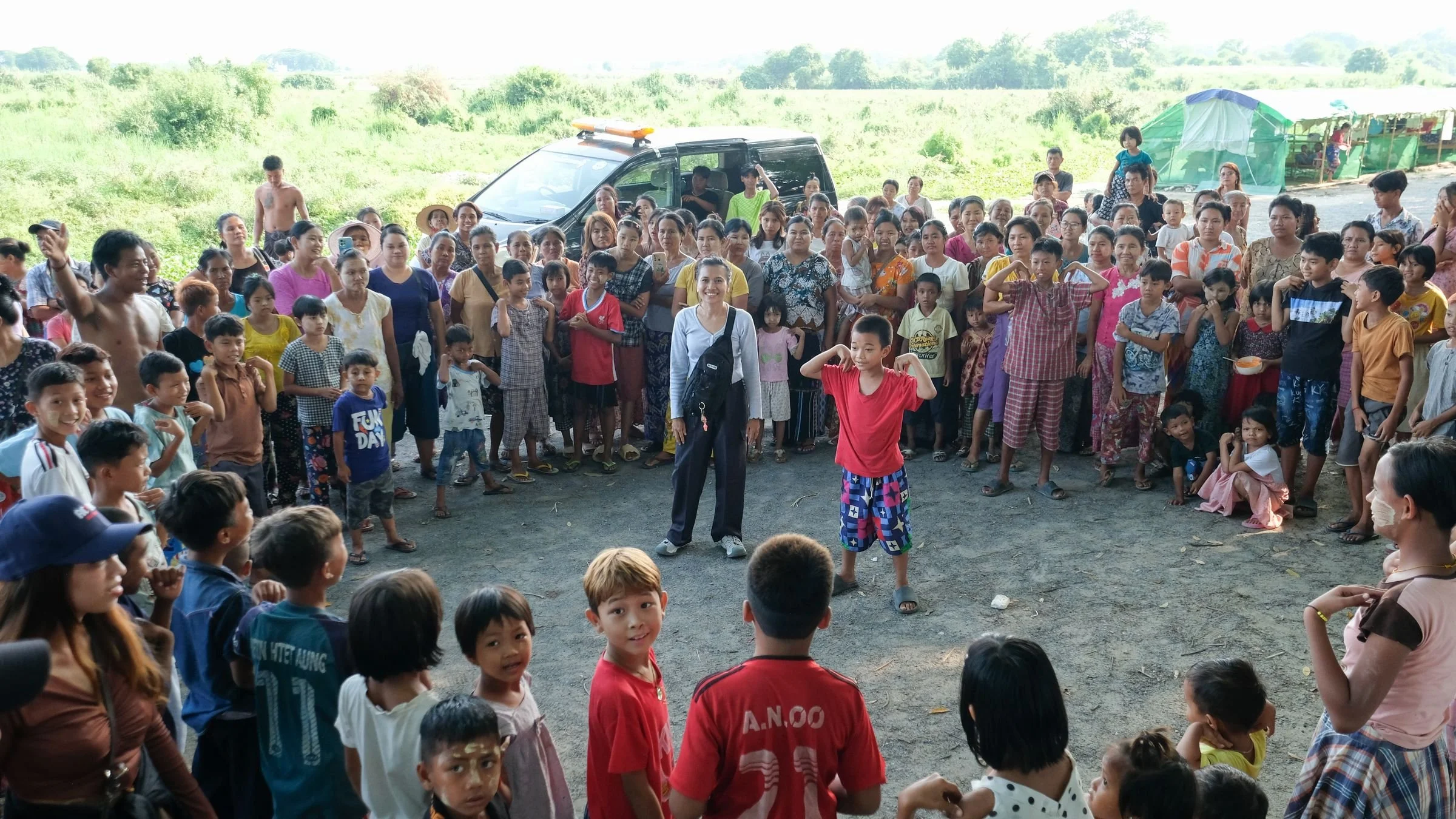
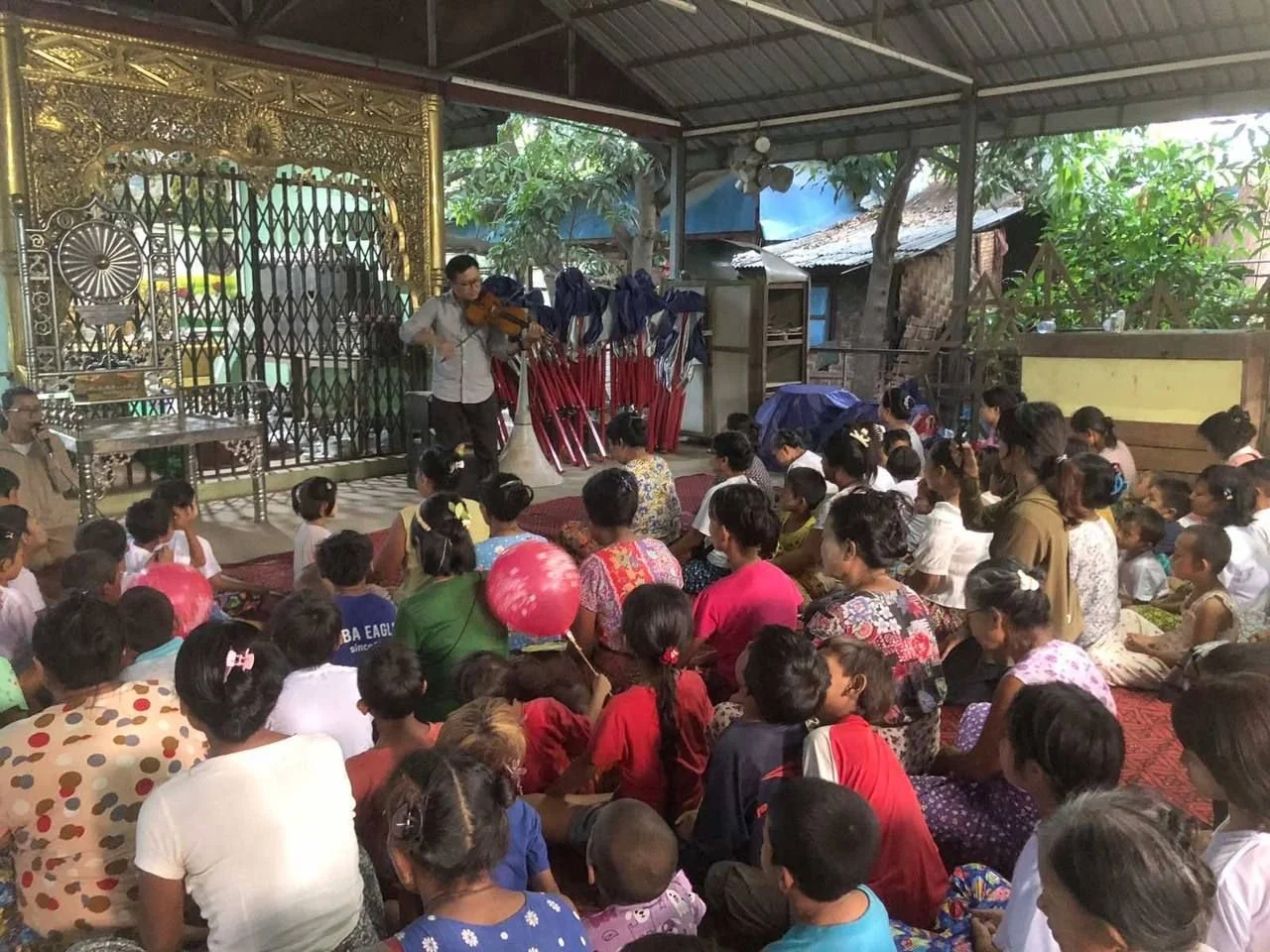
In the camps, people were already singing, drumming and gathering in sound. Nobody organised it; it was how they coped. Sound of Hope builds on that. Group music needs no shared language, almost no equipment and no forced talking, and it gives people a way to calm their bodies, reconnect and feel some hope.
“We mostly receive basic needs and food supplies, but this mental awareness and facilitation combined with music truly gave inner peace and tranquility, not only for the children, but for people of all ages.”
Community member, first outreach trip, May 2025
How we work
Every cycle follows the same loop, a method called participatory action research. The facilitators are partners in the research, not just trainees, and what they learn in the field changes the next round.
1. Train
Local musicians, teachers and community workers learn psychological first aid, trauma-informed care and low-resource music tools: breathing, humming and toning, rhythm, body percussion, movement, singing and structured sharing.
2. Facilitate
Teams take sessions to camps, monasteries, schools and village spaces, and adapt each activity to the group in front of them, from 16 children in a nursery to 200 people in a monastery compound.
3. Reflect and adapt
Each evening the team reflects together. Field notes, journals, interviews and participant feedback shape the next cycle, so local knowledge becomes part of the method.
How the work spreads
The work spreads in a cascade, so it keeps going after the visiting team leaves.
Core facilitators, trained by the team
Community leaders, trained in the field
Their communities, every week
The work so far, as a score
Four lines run through Sound of Hope: training, outreach, research, and sharing the work at talks and conferences. Every moment is numbered in order.
2025
1. Foundation course
27–29 April 2025, training
Fourteen participants complete a three-day online course in trauma-informed music facilitation and psychological first aid, led by Supa and Dr Phway Nu Moe.
2. First practice, at Jazz Day
30 April 2025, training
At International Jazz Day in Yangon, the new trainees lead more than 700 people in a public music activity.
3. Music leadership training
7–10 May 2025, training
Four days, hybrid: Otto de Jong of Musicians Without Borders teaching online, the trainees together in Yangon.
4. Pilot outreach trip
13–22 May 2025, outreach
More than 14 communities in Pyawbwe, Inle, Amarapura, Sagaing and Mandalay; over 2,000 people of all ages.
5. Project Report 1
30 May 2025, research
The first cycle documented, from recruitment to the pilot trip.
6. Second training
June 2025, training
Six days, in Yangon and online. Six new trainees join, making 13.
7. Reflection published
2 July 2025, talks and conferences
Musicians Without Borders publishes Supa’s account of the first cycle.
8. Inle Lake and Kalaw
2–7 July 2025, outreach
Sessions in four villages, a workshop for 150+ community leaders in Kalaw, and a free concert at Nyaung Shwe City Hall on 5 July.
9. Project Report 2
12 July 2025, research
The second cycle, June to July, with lessons on safety, inclusion and role rotation.
10. Music for leadership
28–31 July 2025, training
Team development and two days of training with Joanne Lauterjung of SonicBloom at the Institut Français de Birmanie.
11. Inle and Nyaung Shwe
21–26 September 2025, outreach
Five sessions: an early-childhood centre, a nursery school, a women’s monastery camp, a youth orphanage and a private school.
2025, continued
12. Mandalay and Sagaing
6–12 October 2025, outreach
Six sessions in monastery camps, informal settlements, community fields and Happy Star Music School in Mandalay, with groups of up to 200.
13. Exchange in Germany
19–26 October 2025, training
Music leadership training with Musicians Without Borders, and a concert with Realms Beyond Borders at the Enjoy Jazz festival in Heidelberg.
14. SRH University Heidelberg
October 2025, talks and conferences
A workshop and presentation for music therapy students.
15. Seminar in Bangkok
29 October 2025, talks and conferences
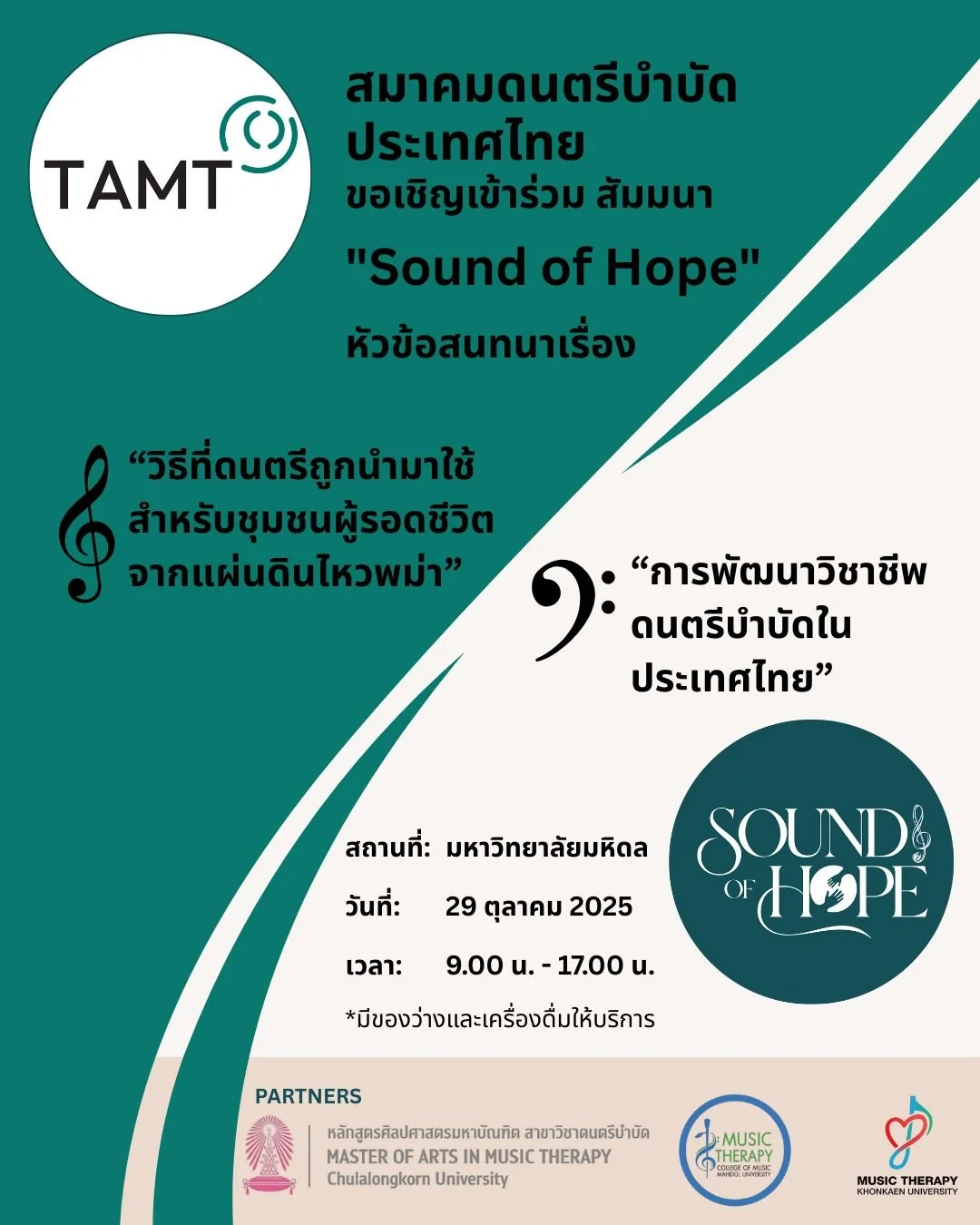
“Sound of Hope” seminar with the Thai Association of Music Therapy and the music therapy programmes of Chulalongkorn, Mahidol and Khon Kaen universities, with improvisation workshops led by Ittinat Seeboonruang, Joanne Lauterjung and Chalat Worayanyong.
16. Facilitator reflection
27 November 2025, research
A group interview in which the facilitators look back on both Cycle 3 trips.
17. Toolkit v1.3 and Report 3
7 December 2025, research
The methods, frameworks and activities gathered into one toolkit, with the Cycle 3 report.
2026
18. Toolkit workshops in Yangon
29–31 January 2026, training
A toolkit review with the core team, a public workshop, and five newcomers leading their first activities.
19. Mandalay Mental Health Gathering
29 March 2026, outreach
The first of monthly meetings for local practitioners in Mandalay, run with local partners.
20. World Congress of Music Therapy
11 July 2026, talks and conferences
Paper in Bologna: “Adapting Music Therapy for Crisis: Participatory Action Research in Post-Earthquake Myanmar”.
21. Shelter for Hope
27 September 2026, outreach
A music facilitation afternoon with Crossworks Myanmar at Gallery Ohmar in Yangon, with Itö. Ticket profits went to the Shelter for Hope project, which helps families on the outskirts of Yangon with roofs and safe shelter.
22. IAMM 2026
October 2026, talks and conferences
Presentation at the 9th International Conference of the International Association for Music & Medicine, online.
23. A case study, written together
2026, research
Facilitators are invited to co-author a paper on how the programme was planned, tried and adapted.
At a glance: the same 23 moments on four lines, read left to right like music. On a phone, scroll sideways.
- Training
- Outreach
- Research
- Talks and conferences
Four trips into affected communities
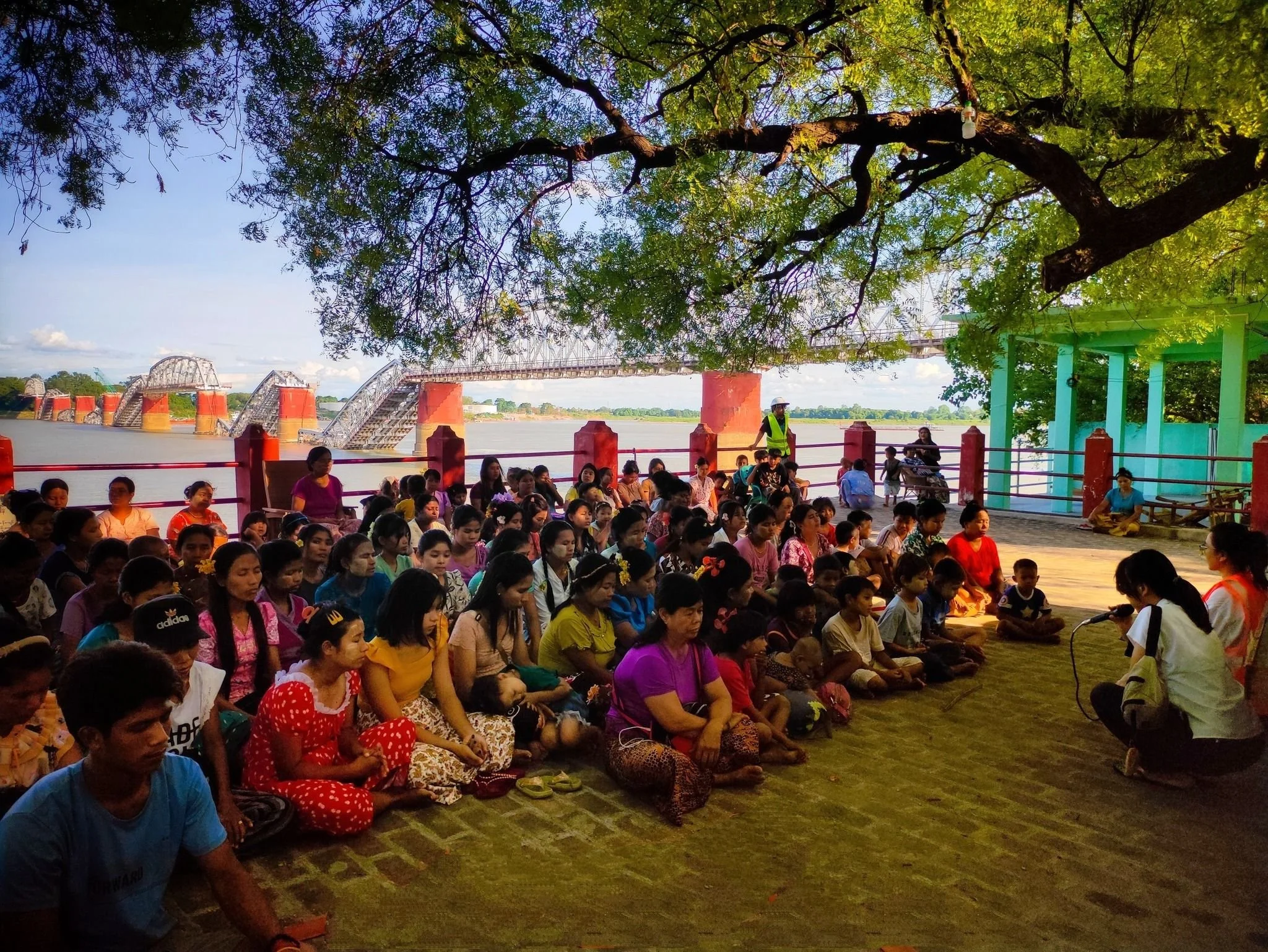
Teams of five to thirteen facilitators travelled by van, boat and bus to camps, monasteries, schools and villages. In autumn 2025, each five-day trip was budgeted at 3.4 to 3.7 million kyat for transport, food, lodging, materials and facilitator fees.
Pilot trip, 13–22 May 2025
Pyawbwe, Inle, Amarapura, Sagaing and Mandalay. More than 14 communities and over 2,000 people of all ages, in churches, camp courtyards and open fields.
Inle Lake and Kalaw, 2–7 July 2025
Sessions in Nwar Dhama, Kaelar, Lel Chey and Kyun Gyi Taung, a workshop for more than 150 community leaders in Kalaw, and the free Sound of Hope concert at Nyaung Shwe City Hall on 5 July.
Inle and Nyaung Shwe, 21–26 September 2025
Five sessions by boat and road: an early-childhood centre, a village nursery, a women’s monastery camp, a youth orphanage and a private school. Returning trainees helped lead.
Mandalay and Sagaing, 6–12 October 2025
Six sessions in monastery camps, informal settlements, community fields and a music school, for women’s groups, elders, young people and children with disabilities.
Mandalay Mental Health Gatherings, since March 2026
A monthly space in Mandalay where local practitioners and community workers share experiences, talk about needs and plan support together, run with local partners as a six-month pilot.
Training local facilitators
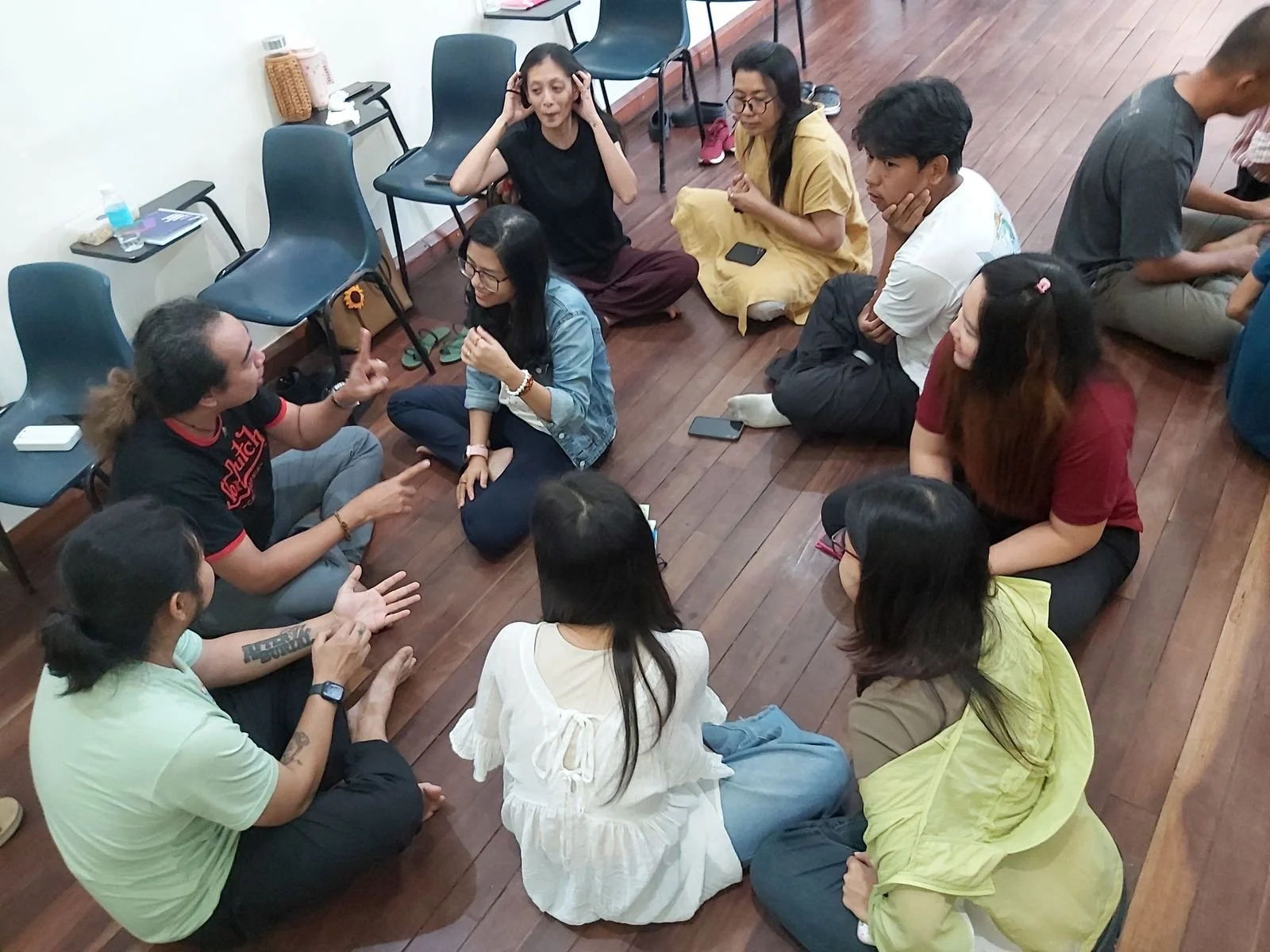
When Sound of Hope began, Myanmar had one certified music therapist. So instead of flying specialists in, we train people who live and work here. After a public call in April 2025, 14 people took the first course; a second round brought the team to 13 active facilitators, and five more led their first sessions in January 2026.
What the training covers
Psychological first aid, and how stress and trauma show up after a disaster
Active listening and a strengths-based, resource-oriented approach
Music therapy methods and when voice work is and isn’t safe
Session design with the LOVE framework, and team practice with GRRIP and plus/delta feedback
Music leadership with Musicians Without Borders: the sound of why, the sound of how, and the sound of the nervous system
Trainers
Otto de Jong (Musicians Without Borders), Joanne Lauterjung (SonicBloom), Dr Phway Nu Moe, and music therapists Supakarn Nakavisut, Mei-Ling Tan, Samuel Gracida and Ittinat Seeboonruang, four of them graduates of SRH University Heidelberg.
Music Facilitation Foundation Training သင်တန်း
Foundation training in Yangon and online for musicians, teachers and community workers. Complete it to receive a Level 1 certificate and join the outreach team. Ask about the next training.
What we are learning
These are early, qualitative findings from session notes, journals, interviews and debriefs. We report what people told us and avoid claims the evidence can’t yet carry.
Music helped people calm down and let feelings out
Participants described relaxation, lightness and less fatigue. Facilitators saw laughter and a shift in the room.
“The breathing section made me feel relaxed. My mind feels lighter and refreshed.”
Participant, Kaelar village, July 2025
Sessions rebuilt a sense of togetherness
Moving and singing together let people take part without being made to talk. Familiar songs made the space their own.
“This experience made space to talk and share without feeling pressured. I could feel my stress level going down.”
Participant, Inle, September 2025
Facilitators made the tools their own
Health chants became rhythm games, humming was adapted for different bodies and settings, and community leaders asked to use the methods in their own groups.
“I will apply what I learned and include it when I do sharing sessions for young people.”
Participant, 2025
Reports and toolkit
Read Reports 1 and 2 below. Report 3 and the Sound of Hope Toolkit are shared with funders, partners and practitioners on request. Toolkit version 1.4 and a Burmese translation are in progress.
Project Report 1, 27 April to 30 May 2025
Project Report 2, 4 June to 12 July 2025
Project Report 3, August to November 2025 (ask for a copy)
Sound of Hope Toolkit, version 1.3, 7 December 2025 (ask for a copy)
Talks and conferences
11 July 2026: World Congress of Music Therapy, Bologna
“Adapting Music Therapy for Crisis: Participatory Action Research in Post-Earthquake (7.7) Myanmar”, by S. Nakavisut and M. L. Tan.
October 2026: IAMM 2026, online
Sound of Hope at the 9th International Conference of the International Association for Music & Medicine.
29 October 2025: Thai Association of Music Therapy, Bangkok
A day-long “Sound of Hope” seminar with the music therapy programmes of Chulalongkorn, Mahidol and Khon Kaen universities, and improvisation workshops led by Ittinat Seeboonruang, Joanne Lauterjung and Chalat Worayanyong.
October 2025: SRH University Heidelberg
The Sound of Hope team ran a workshop and presentation for music therapy students during its exchange in Germany.
June and July 2025: In print and online
Musicians Without Borders published Supa’s reflection and a story on the team’s first months; Music Teacher magazine covered the work in its health and wellbeing column.
“If we give hope to humanity, humanity will give hope back to us.”
Supakarn Nakavisut, Training Director, writing for Musicians Without Borders, July 2025
“I am very happy because I forgot all the bad things and started laughing.”
Participant, Mandalay, October 2025
“Once one person started sharing, then more people started to share.”
Facilitator, Cycle 3 reflection, November 2025
The team
Sound of Hope is run by a core team of about a dozen facilitators from Yangon and beyond: musicians, teachers, health and community workers. Their first names stay off this page unless they choose otherwise.
Itö (Win Htut Thawdar)
Co-founder and Outreach Director
Supakarn Nakavisut (Supa)
Training Director; music therapist and PhD researcher at the Cambridge Institute for Music Therapy Research, Anglia Ruskin University
Moe Myat May Zarchi
Steering committee; trip lead, documentation and photography
Funders and partners
SEA Junction Small Grants Program (Cycle 3), CMB Foundation, Musicians Without Borders, Institut Français de Birmanie, SonicBloom, SRH University Heidelberg, the Thai Association of Music Therapy, Inle Heritage, Buddha’s Weg, and everyone who gave to our fundraiser.
What comes next, and how to help
Next
Toolkit version 1.4 and a Burmese translation for every community leader we have worked with
Follow-up and cascade training with the 48 community leaders in our network
Supervision and debriefing for facilitators, who carry heavy stories home
Monthly Mandalay Mental Health Gatherings for local practitioners
Give
Cycle 3’s two trips cost 6.4 million kyat in total. Gifts of any size help us plan the next one. Donate
Partner
Fund a cycle, host a workshop, invite a talk or share clinical supervision. Email the team
Train with us
Musicians, teachers and health workers in Myanmar: message the Sound of Hope page to hear about the next foundation training. Message us on Facebook